
How to Boost Testosterone Naturally After 35
If you're over 35 and you've noticed your energy, recovery, drive and gym performance aren't what they used to be, you're not imagining it. After roughly age 30, total testosterone in men declines by about 1% per year on average, with free (usable) testosterone often falling faster as sex-hormone-binding globulin rises with age.
The good news: a large share of that decline is driven by lifestyle factors you can actually control. Before anyone reaches for TRT, the highest-ROI moves are almost always free. Here's the order of operations I've used as a natural competitor for two decades, and that I coach men on every week.
First, understand what "low" actually means
Lab reference ranges for total testosterone typically run from about 300–1,000 ng/dL. But "in range" and "optimal" aren't the same thing. Many men in their 40s sit in the low-normal band and feel exactly as flat as the number suggests. If you suspect a real problem, get bloodwork — total testosterone, free testosterone, and SHBG — before and after you make changes, so you're measuring instead of guessing.
1. Fix sleep first — it's not optional
Testosterone is produced largely during sleep, and the research here is blunt: in healthy young men, cutting sleep to 5 hours a night for one week reduced daytime testosterone by 10–15%. After 35, when your baseline is already lower, you simply can't afford a chronic sleep deficit.
- Anchor a consistent sleep and wake time, including weekends.
- Get the bedroom dark and cool, and keep screens off in the last 30–60 minutes.
- Treat 7–9 hours as a training variable, not a luxury.
2. Lift heavy, and don't skip legs
Resistance training is one of the most reliable natural levers for hormonal health. Compound, multi-joint movements that load large muscle groups — squats, deadlifts, presses, rows — produce the biggest acute hormonal response and, more importantly, drive the long-term improvements in body composition and insulin sensitivity that keep testosterone higher.
You don't need to live in the gym. Three to four hard sessions a week, progressively overloaded, beats six junk sessions. If you want a structured plan built specifically for men over 35, that's exactly what the 12-week training protocol is designed for.
3. Get lean — body fat is hormonal
Excess body fat, especially around the midsection, increases the activity of the aromatase enzyme that converts testosterone into estrogen. The relationship runs both ways: low testosterone makes it easier to gain fat, and excess fat suppresses testosterone. Breaking that loop by getting to a healthier body-fat percentage is one of the most powerful things you can do. (If fat loss is your sticking point, here's how fat burners actually work after 35.)
4. Eat enough — and eat for hormones
Chronic aggressive dieting and very-low-fat diets both tend to push testosterone down. Dietary fat and cholesterol are raw materials for hormone production. Practical targets:
- Protein: roughly 0.7–1g per pound of bodyweight to support muscle and recovery.
- Fats: don't go ultra-low; include monounsaturated and saturated sources.
- Micronutrients: zinc, magnesium and vitamin D deficiencies are all linked to lower testosterone — and they're common.
5. Manage stress and alcohol
Cortisol and testosterone have an inverse relationship; chronically elevated stress hormones suppress the signal that tells your body to produce testosterone. Heavy alcohol intake does the same. You don't have to be a monk — but if drive and recovery matter to you, the math on a heavy weekend is real.
6. Then — and only then — consider supplementation
Supplements are the last 10%, not the first 90%. No capsule fixes four hours of sleep and a bad diet. But once the fundamentals are handled, specific ingredients do have human research supporting a role in natural testosterone support — particularly correcting deficiencies (zinc, magnesium, vitamin D) and a handful of botanicals.
We go deep on exactly which ingredients have evidence — and which are marketing — in our companion article: testosterone-boosting ingredients that actually work.
The honest summary
Natural testosterone optimization after 35 isn't a hack — it's the compounding result of sleep, heavy training, getting lean, eating enough, managing stress, and then layering in well-formulated support. Do the boring things consistently and the number on your bloodwork usually follows.
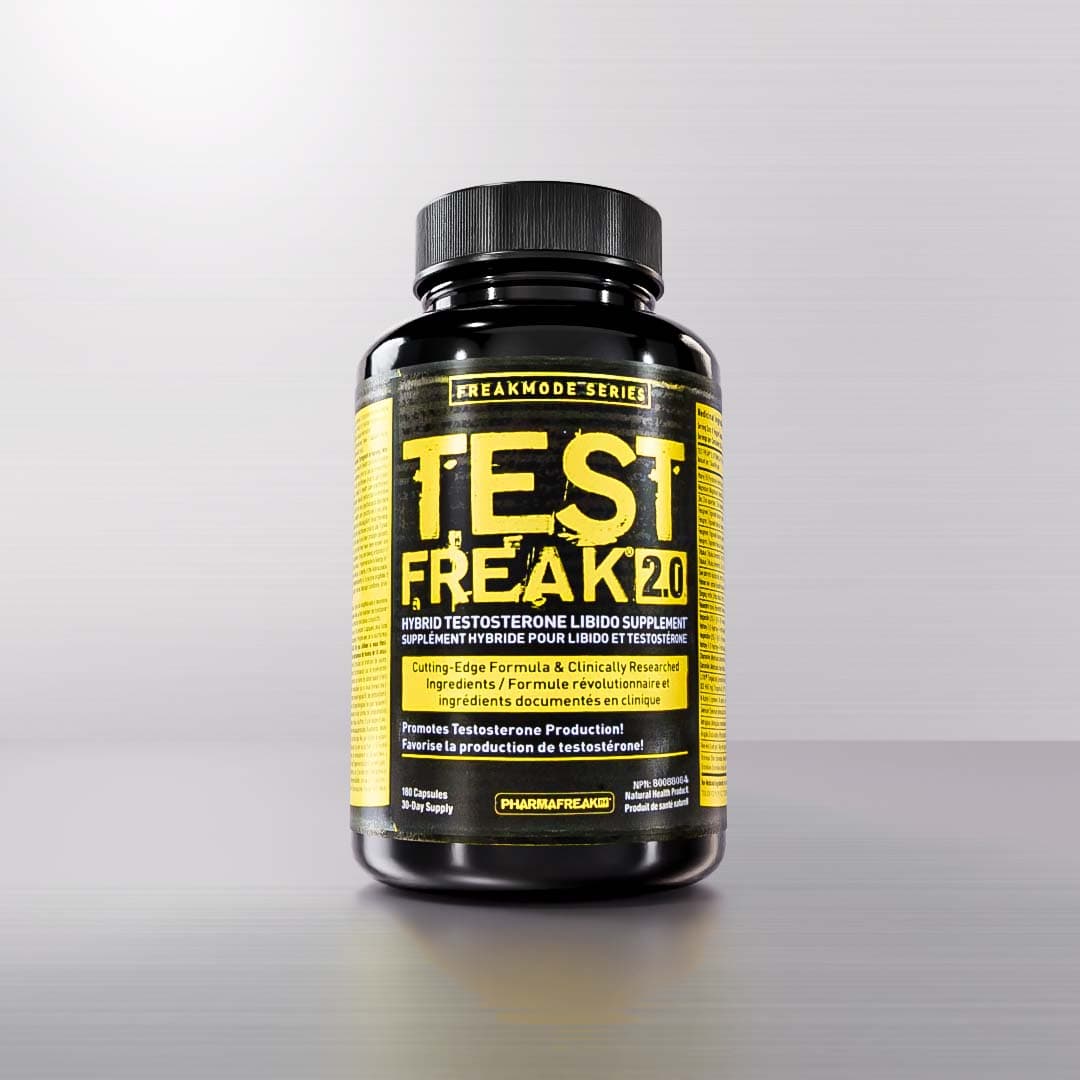
Test Freak 1.0
A 10-ingredient natural T-support formula anchored by zinc, magnesium and fenugreek — the deficiency-correctors and botanicals this article covers.
This article is for educational purposes only and is not medical advice. Dietary supplements are not intended to diagnose, treat, cure or prevent any disease. Consult a qualified healthcare professional before starting any supplement, especially if you have a medical condition or take medication.