
Citrulline Malate: Benefits and Dosing
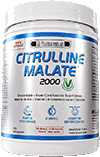
Citrulline is one of the few "pump" ingredients with actual research behind it — which also makes it one of the most under-dosed. Most pre-workouts sprinkle in a token amount so they can put it on the label, then wonder why nobody feels anything. Here's what citrulline malate really does, and how to use it properly.
How it works
Citrulline is a precursor to arginine and, in turn, nitric oxide — the signal that relaxes blood vessels and increases blood flow. Interestingly, citrulline raises blood arginine levels more effectively than taking arginine itself, because it bypasses a chunk of gut breakdown. More blood flow is the basis for the "pump," and for delivering oxygen and nutrients to working muscle.
What the evidence actually shows
The study that put citrulline malate on the map (Pérez-Guisado & Jakeman, Journal of Strength & Conditioning Research, 2010) gave trained men 8 g before training and found significantly more bench-press reps on later sets, plus a roughly 40% reduction in muscle soreness at 24 and 48 hours. Impressive — but it's one study, and replication has been more mixed. A 2021 meta-analysis (Vårvik et al., IJSNEM) pooled the trials and found a real but small effect: about 6% more reps on average — think roughly one extra rep across a session. That's a genuine edge for a natural ingredient, but it's a margin, not magic.
One honest caveat: don't buy citrulline for endurance. The evidence for improving VO2 max, time-to-exhaustion or aerobic performance is inconsistent at best. Its lane is resistance-training volume, pumps and recovery.
The dose is everything
This is why most people "feel nothing": the research used 6–8 g of citrulline malate (about 3–4.5 g of L-citrulline), taken roughly 60 minutes before training. A few hundred milligrams buried in a pre-workout blend isn't a real dose. If you want the effect the studies describe, you have to take the amount the studies used — which is exactly the argument for a standalone, dose-it-yourself product.
The bottom line
Citrulline malate is a legit, well-tolerated training-volume and recovery aid — as long as you respect the dose and keep expectations realistic. For a clean, fermented source you can dose to the studied range (instead of the pixie-dust amount hidden in most pre-workouts), see Citrulline Malate. For where it fits in a full pre-workout, read our pre-workout guide.
Key references: Pérez-Guisado J, Jakeman PM. J Strength Cond Res. 2010;24(5):1215–1222 (PMID 20386132). Vårvik FT, Bjørnsen T, Gonzalez AM. Int J Sport Nutr Exerc Metab. 2021;31(4):350–358 (PMID 34010809).
Citrulline Malate
A clean, fermented citrulline malate you can dose to the studied 6–8 g range — for blood flow, training volume and recovery.
This article is for educational purposes only and is not medical advice. Dietary supplements are not intended to diagnose, treat, cure or prevent any disease. Consult a qualified healthcare professional before starting any supplement, especially if you have a medical condition or take medication.