
Collagen for Joints, Tendons and Recovery
Collagen is the main structural protein in your tendons, ligaments, joints and skin — the connective tissue that takes a beating when you train. Supplemental collagen gets hyped for everything under the sun, but it actually has some of the more credible evidence in the connective-tissue category. Here's what holds up.
Joint comfort: the strongest case
The standout study (Clark et al., Current Medical Research & Opinion, 2008) gave 147 athletes with activity-related joint pain 10 g of collagen hydrolysate daily for 24 weeks and saw significant improvements in joint pain versus placebo — strongest in those with knee pain. A later trial (Zdzieblik et al., 2017) found benefit in active young adults with knee pain at just 5 g/day. For people whose joints ache from years of training, that's a meaningful, well-tolerated option.
Tendons: promising mechanism, shorter evidence
There's a clever, well-known finding here (Shaw et al., American Journal of Clinical Nutrition, 2017): taking ~15 g of collagen (as gelatin) with vitamin C about an hour before loading the tissue roughly doubled markers of collagen synthesis in the blood. That's the basis for the "collagen + vitamin C, then train" timing trick. Be honest about what it measures, though — it's a blood biomarker of synthesis, not proof of faster-healed tendons or fewer injuries. Promising, not conclusive.
What collagen is NOT for
Don't use collagen as your muscle-building protein. It's low in leucine and an incomplete protein, so for muscle growth and recovery, whey or food protein wins easily. Collagen's job is connective tissue, not biceps. It's also worth noting many collagen trials are short and industry-funded and use specific peptide products — the direction of the evidence is good, but keep expectations grounded.
How to take it
- Dose: ~10–15 g of collagen peptides per day (joint studies used 5–10 g).
- Tendon timing: if you're targeting connective tissue, take it with a source of vitamin C about an hour before training.
- Consistency: the joint trials ran 12–24 weeks — this is a play-the-long-game supplement, not an overnight fix.
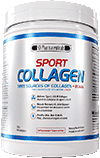
For a multi-type hydrolyzed collagen built for people who train, see Sport Collagen. Stack it with the rest of your recovery basics and give it a few months to do its work.
Key references: Clark KL, et al. Curr Med Res Opin. 2008;24(5):1485–1496 (PMID 18416885). Zdzieblik D, et al. Appl Physiol Nutr Metab. 2017 (PMID 28177710). Shaw G, et al. Am J Clin Nutr. 2017;105(1):136–143.
Sport Collagen
Multi-type hydrolyzed collagen peptides to support joints, tendons, skin and connective tissue — built for people who train hard.
This article is for educational purposes only and is not medical advice. Dietary supplements are not intended to diagnose, treat, cure or prevent any disease. Consult a qualified healthcare professional before starting any supplement, especially if you have a medical condition or take medication.