
DIM for Men: What It Actually Does
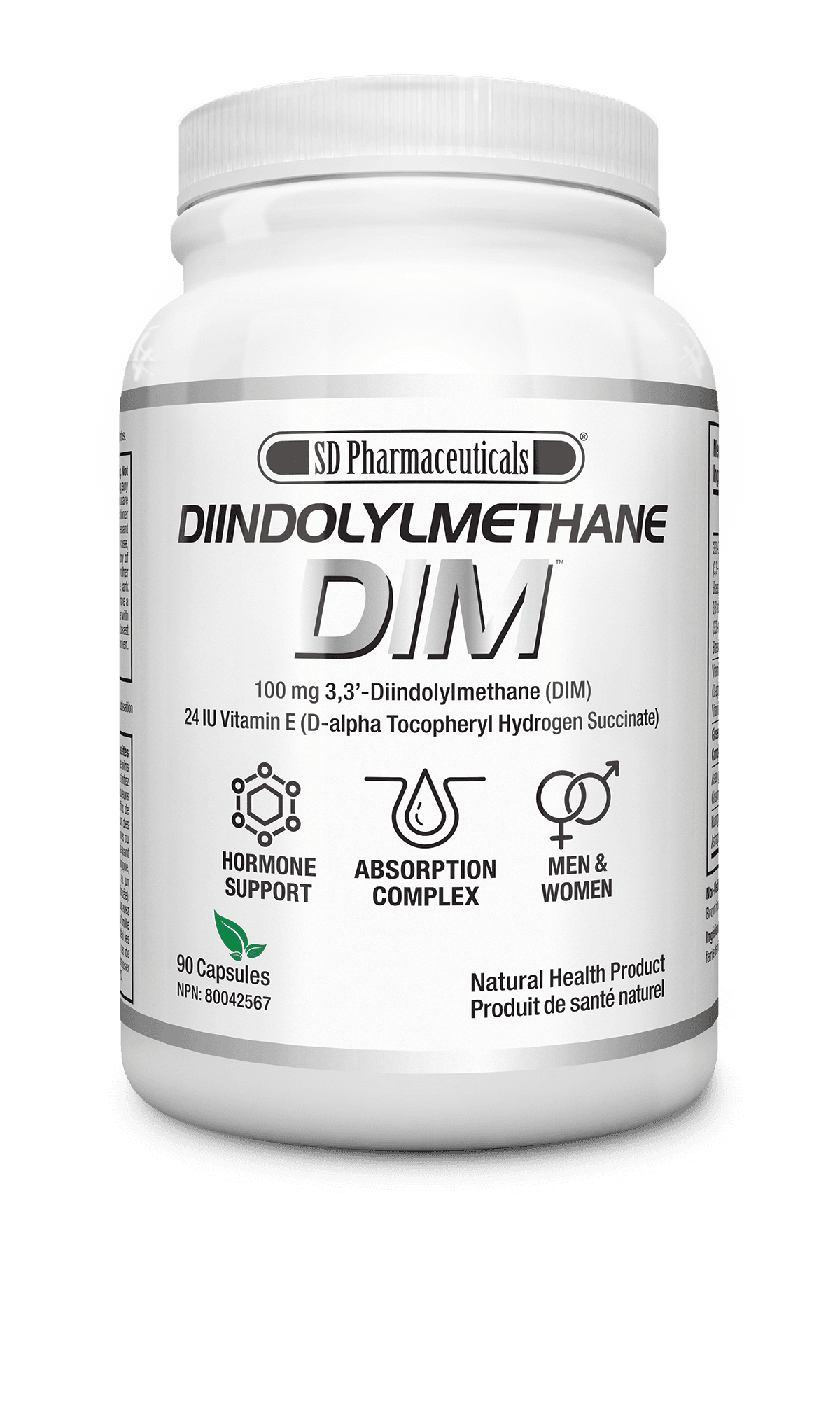
DIM (diindolylmethane) has become a go-to in the "estrogen balance" corner of men's supplements. We're going to do something the category usually doesn't: separate what's mechanistically real from what's actually been proven in men. Because there's a real gap between the two.
The mechanism (this part is real)
DIM is formed when your body breaks down indole-3-carbinol, a compound found in cruciferous vegetables like broccoli and cabbage. It nudges estrogen metabolism toward the "2-hydroxy" pathway — raising the ratio of 2-hydroxyestrone to 16-alpha-hydroxyestrone, a profile often described as more favorable. That shift in metabolites is reproducible and well-documented.
What's actually been shown in humans
Here's the honest part. That metabolite shift has mostly been demonstrated in clinical populations and in women — for example, a 2011 study in thyroid-disease patients (Rajoria et al., Thyroid) using 300 mg/day. What has not been demonstrated in good trials is the thing most men buy DIM for: there's no solid randomized evidence that DIM lowers estradiol, raises testosterone, improves body composition, or relieves "estrogen dominance" symptoms in healthy men. The favorable metabolite ratio is a biomarker, not a proven real-world benefit — and in the female and clinical trials that exist, hard outcomes have been mixed or null.
So should a man take it?
This is a "go in clear-eyed" ingredient. If you're curious and want to experiment, DIM is generally well-tolerated — but it shouldn't be the first lever you pull. The things with real evidence for male hormonal health are unglamorous: sleep, training, getting lean, and correcting deficiencies like zinc, magnesium and vitamin D. We cover those in how to boost testosterone naturally after 35 and the ingredients that actually have evidence. Get those right first.
Dosing context
Human studies have typically used 100–300 mg/day of DIM, often in enhanced-absorption forms. There's no established "effective dose" for any specific male outcome, precisely because those outcomes haven't been demonstrated yet.
If you want to try it, do it the transparent way — a single, disclosed ingredient rather than a hidden blend. That's what DIM (Diindolylmethane) is: one ingredient, dosed and labelled, so you know exactly what you're testing.
Key references: Rajoria S, et al. Thyroid. 2011;21(3):299–304 (PMID 21254914). Memorial Sloan Kettering integrative-medicine monograph on diindolylmethane (mskcc.org) summarizes the limited human evidence.
DIM (Diindolylmethane)
Single-ingredient diindolylmethane, fully disclosed — for men who want to try it with clear eyes, not marketing hype.
This article is for educational purposes only and is not medical advice. Dietary supplements are not intended to diagnose, treat, cure or prevent any disease. Consult a qualified healthcare professional before starting any supplement, especially if you have a medical condition or take medication.