
Does D-Aspartic Acid Actually Boost Testosterone?
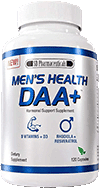
D-aspartic acid (DAA) is one of the most marketed "natural testosterone" ingredients out there — and one of the best examples of why you should always look for the second study, not just the first. As a brand built by a natural competitor, we'd rather tell you the honest version than sell you a myth.
The study that started the hype
DAA blew up after a 2009 trial (Topo et al., Reproductive Biology and Endocrinology) reported a ~42% rise in testosterone over 12 days. That sounds enormous — but read the fine print: it was short, and it was done in untrained men (and infertile men), not athletes. A promising signal, but a narrow one.
What happened when they tested trained men
This is where the story falls apart. When researchers tested DAA in resistance-trained men — the people actually buying it — the results were null to negative:
- Willoughby & Leutholtz (2013, Nutrition Research): 3 g/day for 28 days alongside heavy training produced no change in total or free testosterone, body composition or strength versus placebo.
- Melville et al. (2015, JISSN): tested 3 g and 6 g/day in trained men. Nothing at 3 g — and at 6 g, testosterone actually went down. More was not better; more backfired.
The honest bottom line
In already-trained men, the weight of the randomized evidence says DAA is not a reliable standalone testosterone booster — and chasing a higher dose can work against you. The one supportive study was in a different population entirely. That's the kind of nuance the supplement aisle conveniently skips.
Where DAA might still fit
None of this means the hormonal fundamentals don't matter — they matter most. If testosterone is your goal, the highest-ROI moves are sleep, heavy training, getting lean, and correcting zinc/magnesium/vitamin D, as we lay out in boosting testosterone naturally after 35 and the ingredients that actually have evidence. DAA, if you want to run it, is best viewed as an optional experiment — kept to the ~3 g range, not megadosed — rather than the thing that does the work.
If you want to try it the transparent way, Men's Health DAA+ is single-ingredient and fully disclosed, so you know exactly what you're taking. Just go in with realistic, evidence-based expectations.
Key references: Topo E, et al. Reprod Biol Endocrinol. 2009;7:120. Willoughby DS, Leutholtz B. Nutr Res. 2013;33(10):803–810 (PMID 23890938). Melville GW, et al. J Int Soc Sports Nutr. 2015;12:15.
Men's Health DAA+
Single-ingredient D-aspartic acid, fully disclosed — for those who want to run it themselves alongside the fundamentals that actually move testosterone.
This article is for educational purposes only and is not medical advice. Dietary supplements are not intended to diagnose, treat, cure or prevent any disease. Consult a qualified healthcare professional before starting any supplement, especially if you have a medical condition or take medication.